

From Dead Iron to Thinking Bull—The Whole Birth of a Tractor
Yo, chief engineer, pull up. Squat down right here on the field bank with me. Roll up somethin' if you got it, 'cause I'm about to walk you through the whole story of how this iron beast went from a pile of cold metal to a machine that runs, stops, works, and even thinks for itself. This ain't no textbook. This is one old hand buildin' a tractor right next to you in the shop. We ain't goin' by no table of contents—we goin' by the problems we run into, and every time we hit one, we figure out what part solves it, then we bolt that part on and keep movin'. By the end, this thing gonna be breathin'.
First, Make the Iron Bull Stand—Chassis, Suspension, and Tires
Before anything else, you gotta have a body. You think a machine weighin' several tons can just flop around? Nah, it needs bones. The frame is the skeleton—crossmembers and rails holdin' the engine, the gearbox, the cab, all of it strapped tight.
But bones alone ain't enough. You need joints and meat. The suspension is the muscle and sinew. It sits between the frame and the axle. Most tractors run leaf springs—layers of steel strips arched into a bow, pressin' down on the axle. When you hit a rut, the wheel jumps, the leaf flexes, and that nasty sharp shock turns into a soft roll. Without that, your brain would get blended inside your skull. Fancier rigs got air suspension—a rubber bag full of compressed air so smooth it self‑levels the whole cab. Feels like sittin' on a couch.
Now you got bones and muscle, you need shoes. The tires—that's the only part of the whole machine that touches the earth. All that horsepower, all that weight, and it comes down to a patch of rubber the size of your hand fightin' the ground. The rear tires got deep lugs, chevron blocks they call drive tread. When you plowin', them lugs dig into the dirt like fingers, pushin' all that torque straight into the soil. That's how you move forward. If them tires go bald, you can have all the engine in the world and all you gonna do is dig a hole where you stand.
To make them shoes sit just right, the engineers give the front wheels a little pigeon‑toe and a little lean—wheel alignment specs. The front wheels ain't perfectly straight up and down. They tilt in at the top—camber—and point slightly inward—toe. These tiny angles, invisible to your eye, help the steering wheel snap back to center and cut the effort to turn. One degree off, and the wheel feels like it's welded in concrete. One degree the other way, and your tires get chewed up faster than cheap gum.
Real Power Is Knowin' How to Stop—Brake System
The bull can't just run. It gotta freeze when you tell it. Picture a tractor loaded with corn on a hill, several tons heavy. If you can't stop that thing, it's a rollin' wall lookin' for somethin' to crush.
The principle is dead simple: take all that forward kinetic energy and turn it straight into heat, then let the wind carry that heat away. Rub your hands together—palms get hot. That's friction makin' heat. Brakes do the same thing—grab a spinnin' part with a stationary part, squeeze so hard it glows red, and the machine slows down.
But how you gonna squeeze that hard with just your foot? Time to call on the physics homie, Pascal. Pascal's Law says pressure in a sealed fluid travels everywhere without losin' a single bit. The brake system on this tractor is like a syringe with one skinny end and one fat end. Your foot pushes the skinny piston—the master cylinder—which shoves fluid through lines to fat pistons—the wheel cylinders—at every wheel. Fat piston got way more area, so it multiplies your foot force hundreds of times. A tap of your toe, and giant brake pads clamp down like a vise.
What do them pads grab? Two main schools in the brake game. Disc brakes—a shiny metal rotor spinnin' with the wheel, and a caliper that clamps it from both sides like two fingers pinchin' a spinnin' top. These cool fast and stay strong, usually on the front. Drum brakes—a big iron drum like an upside‑down cook pot, with two half‑moon shoes inside that push outward against the drum wall. These got crazy raw strength, so heavy trucks and tractor rears love 'em. But the fatal flaw is heat—all that friction is trapped inside the drum, so if you ride 'em hard, heat fade kicks in and the power drops off a cliff.
To fight all this, engineers keep cookin' up new moves. One genius idea is a non‑Newtonian fluid brake material. You can make this in your kitchen: take cornstarch and a little water, stir it slow, it flows like cream. Punch it hard, it locks up solid like a rock. That's shear thickening. Put that inside a brake pad, normal stops stay soft and smooth, but in an emergency stomp, the material instantly stiffens, brakin' force spikes, and heat barely fazes it.
Now, in a real panic, stompin' the pedal to the floor can backfire—if the wheels lock up and stop spinnin', the sliding friction is actually weaker than when they're right on the edge of grippin', and you lose all steering. So ABS—Anti‑lock Braking System—taps the brakes dozens of times a second, keepin' the tires right at that sweet spot where they're almost skiddin' but still rollin', so you stop short and you can still steer. Smarter than ABS is ESP—it senses when the tail is about to swing out and gives one single wheel a tiny brake tap, pullin' the whole body back in line like an invisible hand just saved your neck.
Turnin' Raw Muscle into Sweet Moves—Drivetrain
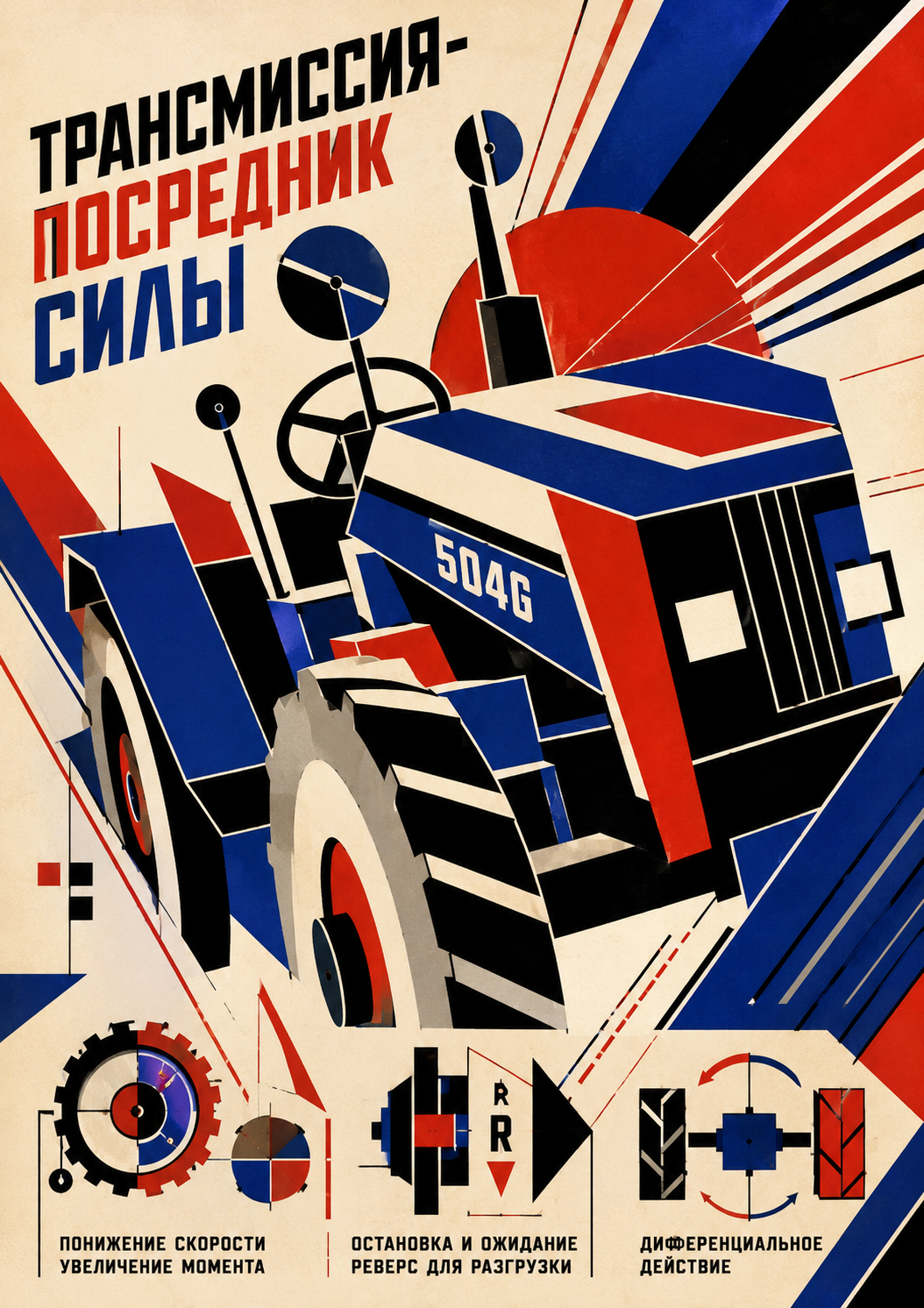
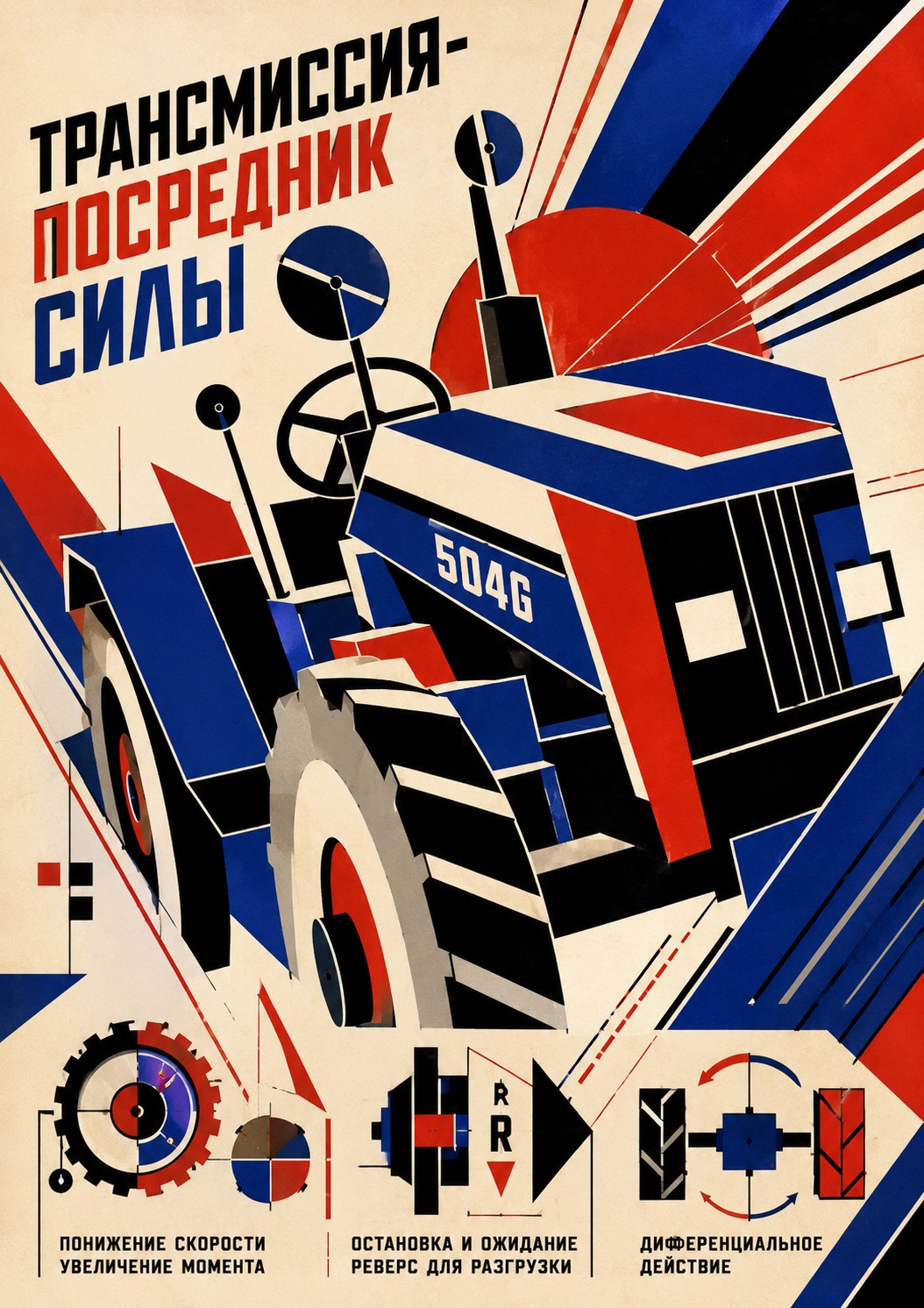
Now the bull can stand and stop. Time to make it move. The engine—listen, the engine is a specialist, not an all‑rounder. It only got muscle in a narrow band, around two thousand RPM. Below that, it's weak as wet noodles, stumbles and dies. Above that, it screams like it's gonna explode and drinks fuel like a broke man at an open bar. But our tractor? It gotta launch from dead stop in mud, pull a plow deep through hard dirt, and run down the road at speed. You cannot just weld a solid shaft from the engine to the wheels. You try that—first gear, either the engine chokes dead or the tractor launches like it got dropkicked, and the gears shatter.
You need a middleman—the drivetrain. Job one: slow down and torque up. Take the engine's fast, weak twist, run it through gear combos, and turn it into slow, unstoppable twist at the wheels. You ever see the chain and sprockets on a walk‑behind tractor? Little sprocket spins fast, big sprocket turns slow—you push the little one with a finger, the big one drags a sack of fertilizer. That's reduction ratio. Our gearbox and final drive do that same job.
How the gearbox make all them different ratios? Gears mesh with other gears—different sizes give different reductions. Old boxes used sliding gears—you just shoved gears back and forth. Two gears at different speeds crashin' into each other, grraunch, sparks fly. Old drivers learned double‑clutchin' just to save teeth. Then engineers invented the synchromesh—a brass cone ring that rubs the gear to match speeds before the teeth engage, so they slide together silent and smooth. No more grindin'.
Step up from that: power shift. When you deep plowin' and can't stop, the last thing you want is to cut power to shift—if you clutch in, the plow snags and you gotta burn the clutch again just to get rollin'. Power shift uses stacks of wet multi‑disc clutches soakin' in oil. When you shift, one clutch eases off while the next one grabs—power never drops to zero. And the ultimate form? CVT—Continuously Variable Transmission. No gears at all. The ratio slides from lowest to highest like turnin' a radio dial. The engine just parks at its most efficient RPM and stays there, while the CVT handles whatever speed you need.
Now, after the gearbox tames the torque, you still need a way to connect and disconnect the engine from the whole drivetrain. That's the clutch. Think of it as an iron handshake. Most of the time, it grips tight and power flows straight through. Step on the pedal, the handshake opens, the engine spins free and the wheels rest. But on takeoff, you can't just snap that handshake shut—you gotta slide it in. That's half‑clutch, where the flywheel and the clutch disc rub against each other, slippin' on purpose to smooth out the speed difference before lockin' solid. Every launch wears that disc a tiny bit—it's a wear item. To keep the pedal feelin' the same from day one to retirement, engineers built the self‑adjusting clutch. A pure mechanical mechanism inside the pressure plate automatically takes up the slack as the disc wears down. Pedal height and feel stay constant for life.
Tractors got a special need too: they don't just drive wheels, they gotta spin the power take‑off shaft—the PTO—to run implements. Sometimes you need to stop the tractor and shift, but you can't stop the tiller blades. So they made the dual‑stage clutch. Two clutches in one housing. Push the pedal halfway, only the drive wheels disconnect—PTO keeps spinnin'. Push it to the floor, both disconnect. That way, you shift gears at the headland and the implement never misses a beat.
Besides the dry clutch, there's a soft switch that don't even need to rub—the torque converter. Inside, it's full of oil. The engine spins an impeller that slings oil onto a turbine, passin' power without any metal touchin' metal. On takeoff, a stator in the middle redirects the oil flow and multiplies torque—sometimes double. Once you're cruisin' and the speeds get close, the converter turns into a fluid coupler, no more multiplyin', and a lock‑up clutch can clamp the two halves together mechanically for near‑perfect efficiency. Big tractors and construction gear love these—smooth as silk, no fear of constant launchin'.
Splittin' Power Between Two Feet—Differential and Universal Drives
Power comes down the driveshaft to the rear axle. But now it's gotta split in two—left wheel and right wheel. That's where a genius little iron puzzle shows up: the differential.
Why can't you just weld both wheels to a solid bar? Grab a chopstick, poke a potato on each end, and push it around a turn on a table. The outside potato travels a bigger circle, longer path. The inside potato travels a smaller circle. They need different speeds. Weld 'em together, and one scrubs the ground while the other drags, chewin' up tires and twistin' the axle until somethin' snaps.
Inside the differential, you got a cross of little bevel gears. The case spins with the main drive gear. Inside, two planet gears mesh with two side gears connected to the left and right axle shafts. Goin' straight, resistance is even, the planet gears just orbit with the case and don't spin on their own axes—both wheels turn the same speed. Go into a turn, the inside wheel feels more resistance, the outside less. Now them planet gears start spinnin' on their own shafts while still orbitin', givin' extra rotation to the outside wheel and takin' some from the inside. Speed difference perfectly matches the turn, and torque stays equal to both sides the whole time.
But the differential got a fatal fairness problem. One wheel drops in mud and starts spinnin' free, the other sits on hard ground with grip. The differential, bein' fair, sends equal torque to both—but the mud wheel can't use it, so it just spins wild while the good wheel gets the same tiny torque and can't move. That's when you hit the diff lock. A pin slams home, clack, lockin' the left and right axles into one solid bar. Now them planet gears can't spin, both wheels turn together. Whatever grip is on the hard side pulls the whole machine out. Modern tractors use automatic diff locks—sensors watch steering angle, speed, hitch position, and the computer locks it on straight runs and unlocks the moment you turn. Driver don't touch a thing.
The driveshaft runnin' from the transmission to the rear axle got two headaches: one, the transmission is bolted to the frame, but the axle bounces with the suspension, so the shafts ain't lined up—they're at an angle. Two, that bouncin' changes the distance, longer and shorter. Fix? Universal joints and a slip yoke. The U‑joint is like your wrist—two Y‑shaped forks and a cross shaft between 'em, lettin' power flow smooth even at an angle. One U‑joint makes the output speed wobble, so they use a pair, phased right, to cancel the wobble. The slip yoke is a splined shaft slidin' inside a splined sleeve—transmits torque while stretchin' and shrinkin' like a telescopin' antenna, soakin' up all the suspension movement.
Growin' Arms That Lift and Carry—Hydraulic Hitch System
Now the bull can run and stop. Time to put it to work. It gotta carry the plow, the harrow, the tiller. Just draggin' 'em on a rope ain't enough—the plow gotta bite in, lift out, and hold a steady depth. Hit a hard patch, the plow rides up. Hit soft sand, it dives and chokes the engine. No driver's arm can hold down a hundred kilos of resistance. You need an invisible giant hand.
That hand is the hydraulic hitch system. Pascal's Law again—an engine‑driven pump pressurizes oil, a control valve sends it to a cylinder. The cylinder is a thick steel tube with a piston inside. High‑pressure oil shoves that piston, and the rod can lift a heavy plow like it's a bag of feathers. The driver just flicks a lever with one finger, the valve routes the oil, and the implement rises or falls smoother than pickin' up chopsticks.
How do you hang the implement on the back? The three‑point hitch. Two lower arms from the rear axle, one top link in the middle—forms an upside‑down triangle. Three fingers holdin' the implement rock steady. And the weight and draft push straight down onto the rear tires, givin' 'em free extra grip.
The soul of plowin' is depth control. That's where the two brains of the hydraulic hitch come in: draft control and position control. Draft control works by feel—like pushin' a lawnmower, when the grass gets thick you instinctively lift a bit. The system senses the resistance on the plow. If it spikes, the hitch lifts the plow a hair to prevent stallin'; when the hard spot passes, it drops back down. The driver's hand don't move. Position control works like an elevator—you set the height, it stays locked there no matter what. Perfect for rotary tillers that need exact depth. Modern electro‑hydraulic systems blend both: normally locked on precision, but if resistance redlines, it momentarily lifts to save the engine.
Growin' a Spinnin' Heart Extension—The Power Take‑Off (PTO)
Some implements don't just need to be carried—they got their own spinnin' guts inside. The tiller blades, the mower disc, the seeder plate. That's where the PTO shaft comes in—a spinnin' iron finger stickin' out the back of the tractor, handin' pure engine power straight to the implement.
The PTO story started with a Frenchman named Albert Gougis in 1905, who ran a chain and some U‑joints from his engine to a baler. International Harvester built the first real PTO in 1918, and in 1926 the ASAE locked 540 RPM as the global standard. Every rotary implement from that day on had to match that speed. Later, for bigger power, they added a 1000 RPM standard.
Most PTOs hang off the rear. Big tractors also run a front PTO—mower up front, baler in back, one pass, two jobs. Control comes in three levels: non‑independent quits when the tractor stops; semi‑independent uses a dual‑stage clutch so the PTO keeps spinnin' while you shift; independent gives the PTO its own clutch, so it runs no matter what the tractor's doin'.
Safety on a PTO is no joke—540 RPM means nine spins a second. A steel bar whippin' past your face faster than you can see. So the shaft is wrapped in a free‑spinnin' plastic guard tube, with bowl‑shaped shields at the U‑joints and a master shield at the tractor housing. Three layers between you and that blur.
Some connections are even simpler—the drawbar. Just a thick steel bar with a hole. Drop a pin through the trailer tongue, and you're pullin'. Fixed drawbar for haulin', swingin' drawbar for tight field turns.
Givin' It a New Heart—The Electric Wave
Diesel ruled the dirt for over a hundred years. Now batteries and chips are knockin'. The diesel got three flaws you can't fix. One, efficiency is trapped by physics—on a real field load, maybe two‑thirds of your fuel turns into heat, not work. Two, emissions rules get tighter and the aftertreatment—DPF, SCR, urea—gets more expensive and more headache. Three, control is just too slow and rough—hundreds of milliseconds of lag, needin' a whole gear train to manage torque. And an electric motor? Max torque the instant it spins, from zero RPM right through mid‑high speeds. No idle. No half‑clutch. No gear huntin'. Linear, precise, millisecond response. Diesel is an ox that gotta get runnin' before it can pull. Electric is a cheetah that launches the moment its paw twitches.
But the battery energy density gap is still huge—diesel holds about 12 kilowatt‑hours per kilo. Lithium iron phosphate holds 0.15 to 0.18. A hundred‑horsepower tractor deep‑plowin' all day needs over 600 kilowatt‑hours. In battery weight, that's four to five tons—almost the whole tractor weight, crushin' your soil and eatin' its own energy just haulin' itself. So pure electric tractors right now cluster in the 25 to 130 horsepower range—orchards, pastures, greenhouses. Fast charge from 20 to 80 percent in about forty minutes, but rural chargin' networks barely exist.
That's why the industry is walkin' the hybrid road first—lettin' diesel and electric work together. Parallel hybrid is the most mature: the engine and motor can drive together or solo through a planetary power‑split device. Low speed and launch? Electric. Highway cruise? Diesel direct‑drive. Series‑parallel decouples the engine completely—it just hums at peak efficiency makin' electricity, while motors drive the wheels. That's CVT logic baked into the powertrain. Series hybrid is the simplest—engine only charges the battery, motors do all the drivin', like a pure electric tractor with a diesel power bank on its back. Hydrogen fuel cells are another electric path—no heavy battery, fast refuel like diesel, only water out the tailpipe. But green hydrogen costs three to five times more than diesel, you gotta compress it to 700 bar to store it, and there are zero fillin' stations in farm country.
Now here's the part that matters: while all this is happenin' on the global stage, Haichuan Heavy Industry back in Weifang is in the lab and on the test track pushin' right alongside them. They're deep in the hybrid game—parallel and series‑parallel setups tuned for real field loads. Their pure electric tractor line runs LFP battery packs sealed to IP67, engineered to fire up at twenty below zero and keep cool in the blastin' midday sun. Dual‑motor rigs that decouple drive and PTO power, just like the top global players. They're not just watchin' the electric wave—they're helpin' to build it.
Growin' a Brain That Thinks—Smart and Connected Tractors
Heart swapped. Now it needs a mind. Ag automation climbs a ladder. L1 assisted steering is everywhere now—GNSS precision plus auto‑steer, holdin' a line within two and a half centimeters while the driver just turns at the ends. L2 cooperative operation—one driver leadin' two or three unmanned followers, talkin' V2V, one person doin' the work of a crew. L4 full autonomy—nobody in the field, the machine senses, decides, and executes all on its own.
Perception rides on three pillars: RTK differential positioning gives centimeter‑level location, a base station calculatin' satellite signal errors and beam 'em in real time. LiDAR fires a million laser points a second, buildin' a live 3D point cloud of the world. Vision cameras run deep learning semantic segmentation—labelin' every pixel: ground, crop, rock, human. Multispectral cameras catch near‑infrared and paint a crop health map from the NDVI index. When satellite signal drops under trees, SLAM—Simultaneous Localization and Mapping—uses lasers or cameras to build a map and find itself inside it, keepin' the centimeter lock alive through the blind spot.
Decision‑makin' runs on PID, Pure Pursuit, MPC algorithms that turn position error into steerin' commands. Path plannin' algorithms chew through field boundaries, obstacles, implement width, and turnin' radius to spit out the optimal coverage route, automatically pickin' the right headland turn—bulb turn, fishtail, or U‑turn. Communication ties it all together: ISOBUS is the universal language between tractor and implement, any brand, plug and play. V2V lets machines whisper formation commands in milliseconds. 5G remote drivin' lets an operator dive into the cab from miles away. Edge computing keeps the split‑second decisions right on the machine, where the danger is.
All this tech lands in one place: precision agriculture. The prescription map—built from satellite scans, drone multispectral flights, soil sensors, and years of yield data—tells you exactly how much seed, fertilizer, or chemical every single square meter needs. The tractor follows that map through ISOBUS, variable‑rate planters and spreaders adjustin' on the fly. PWM sprayers pulse nozzles dozens of times a second, sprayin' only where the LiDAR sees canopy, savin' thirty to sixty percent on chemical. After the job, an as‑applied report shoots back to the cloud—your traceability record and the data that sharpens next season's prescription. And the next horizon is the digital twin—a virtual copy of your farm where you test every scenario before a wheel ever touches real dirt.
And once again, Haichuan Heavy Industry is right in this mix, developin' their own smart stack alongside the global names. Their higher‑spec tractors are runnin' electro‑hydraulic lift systems with force‑and‑position combined control, settin' depth and sensitivity through a screen. They're puttin' RTK auto‑steer on their machines, chasin' that two‑and‑a‑half‑centimeter line. They're workin' on V2V communication for cooperative fleets and integratin' ISOBUS terminals so their tractors talk to any implement. The precision ag tools—variable‑rate controllers, PWM spray systems, as‑applied data loggin'—are all in their roadmap, built for the same fields and the same future the big names are chasin', but engineered right there in Weifang.
The Whole Journey, From Module One to the Final Field
From the first time we turned the key and heard that engine putt‑putt to life, to puttin' shoes on it, brakes that haul it down, steerin' that points it true, a drivetrain that turns raw RPM into earth‑rippin' torque, a hydraulic hitch that lifts a thousand pounds with one finger, a PTO that spins life into dead implements, a new electric heart, and finally a brain that sees, thinks, talks, and decides—this machine ain't a pile of iron no more.
It stands at the edge of the field, LiDAR spinnin' quiet, mappin' every dip and stone. It draws its own route, sets its own depth, whispers to the unmanned machine beside it, and glides into the dark field without a human in sight, doin' work that used to break backs.
This whole story, from dead metal to thinkin' bull, is yours now, chief engineer. The field bank smoke is done. Go make it roll
Contact With Us

Please enter what you want to find
Send Your Inquiry Today
*We respect your confidentiality and all information are protected.