

Garden Tractors: Compact Machines Powering Modern Agriculture
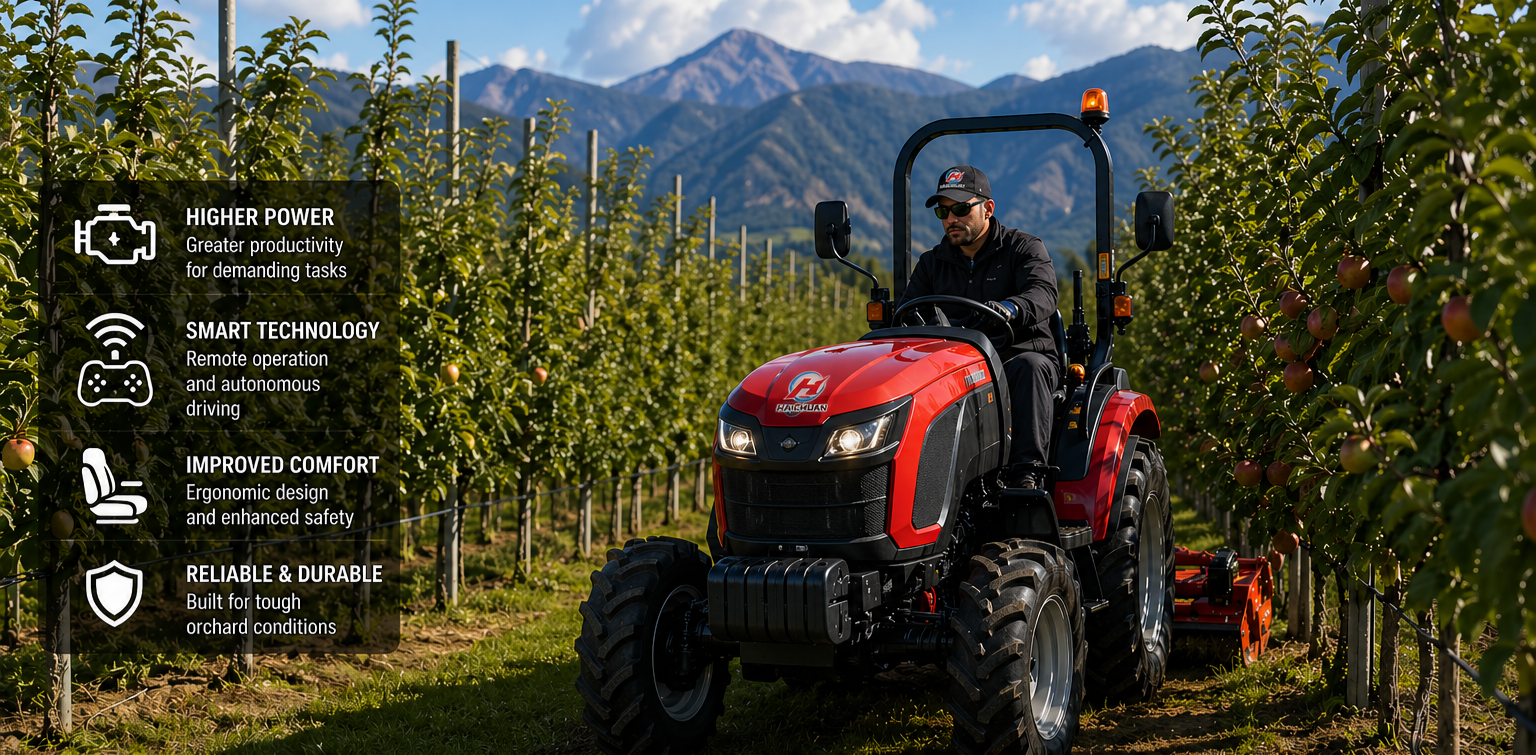
As modern agriculture continues to evolve, specialized machinery has become essential for improving efficiency in challenging working environments. Among these machines, garden and orchard tractors have earned an important place in agricultural operations. Designed specifically for orchards, vineyards, and narrow farming spaces, these compact tractors combine flexibility, precision, and power in ways that traditional farm tractors cannot.
Unlike the large and heavy tractors commonly associated with open-field farming, garden tractors are built with a completely different philosophy: compact size with maximum maneuverability. Their narrow structure, low-profile body, and tight turning radius allow them to move smoothly between rows of trees and through confined spaces where standard tractors would struggle to operate.
Because of their small and unique appearance, these machines often look surprisingly compact compared to conventional agricultural equipment. However, behind their smaller frame lies highly specialized engineering designed for demanding professional work. Operating them safely still requires skill, training, and experience, especially in complex orchard environments.
Modern garden tractors now come in a wide range of configurations to suit different agricultural needs. Around the world, specialized models have been developed for orchards, vineyards, and low-clearance farming applications. In recent years, the industry has expanded even further with new variations including electric-powered models, fuel-powered machines, wheeled systems, tracked versions, remote-controlled units, and even autonomous driving technology.
This growing diversity reflects the rapid modernization of agricultural machinery and the increasing demand for efficient solutions in specialized farming sectors.
Today’s garden tractor market is also being shaped by several major trends.
Higher Power for Greater Productivity
Although many orchard tasks can be handled with moderate horsepower, farmers are increasingly choosing more powerful machines to improve efficiency and support larger-scale operations. Stronger engines also allow tractors to handle multiple attachments and perform more demanding tasks in difficult terrain.
Smart Technology and Remote Operation
Safety and convenience have become major priorities in orchard environments, where operators often face tight spaces, low branches, dust, chemicals, and uneven ground conditions. As a result, remote-control systems and autonomous driving technologies are gaining popularity. Smart operation systems help reduce operator fatigue while improving safety and precision during long working hours.
Improved Comfort and Reliability
Modern garden tractors are no longer simple utility machines. Manufacturers are now focusing heavily on operator comfort, durability, and advanced engineering. Features such as upgraded transmissions, suspension systems, anti-roll protection, and improved cabins are becoming increasingly common. These upgrades not only improve productivity but also create a safer and more comfortable working experience for operators.
The evolution of garden tractors reflects the broader transformation of modern agriculture itself. What began as modified compact tractors has now developed into a highly specialized category of intelligent agricultural machinery. As technology continues to advance, these compact yet powerful machines will play an even greater role in the future of efficient and sustainable farming.
Contact With Us

Please enter what you want to find
Send Your Inquiry Today
*We respect your confidentiality and all information are protected.