

 The Iron Bull's Mighty Arm
The Iron Bull's Mighty Arm
Yo, chief engineer! We done built the whole runnin' gear—chassis, brakes, steerin', transmission. This tractor can roll, turn, stop on a dime. But right now? She's a naked bull. Can't do no fieldwork. We gotta make her carry the heavy stuff—plows, harrows, tillers, seeders—strapped to her back or dragged behind, and she gotta lift 'em, drop 'em, finesse 'em like you usin' your own arm.
That's where the tractor's one‑of‑a‑kind magic comes in: the hydraulic hitch system. Today we crackin' it wide open, see how this iron bull grows muscles and smart hands.
5.1.1 Why Not Just Drag It With a Rope? – Implements Ain't Dead Weight
You might be like, "Man, why don't you just tie a rope to the plow and pull it?" Bruh, if it was that easy, granddaddy woulda never needed a mule. Haulin' a plow through dirt is a whole different beast from pullin' a wagon.
First, diggin' in and liftin' out: The plow gotta bite into the ground, and it gotta pull out clean. At the end of the row, you gotta hoist that whole rig up in the air just to turn around. If you don't, you draggin' a heavy steel blade sideways through the soil, carvin' a trench you didn't ask for.
Second, keepin' the depth steady: Under that dirt, it ain't all the same. Hit a hard patch, the plow rides up like it's hittin' a speed bump—too shallow. Hit a soft sand pocket, the plow nose‑dives like it's fallin' through a trapdoor—too deep, and the engine chokes. You need somethin' that feels that change instantly and adjusts on the fly.
Third, you need brute strength: A moldboard plow bitin' through soil can grab over a hundred kilos of resistance. You think a driver's arm gonna lift that? That's like a toddler tryin' to bench‑press a fridge. You need a hidden giant hand that tosses heavy implements around like toys.
A rope and a couple strong farmhands can't handle that mess. But a good hydraulic hitch? With a few iron rods and some oil, it does the job so smooth it's like a magic trick.
5.1.2 Hydraulic Power – Pascal's Law Pulls Another Shift
Remember Pascal's Law from the brake chapter? Sealed fluid, pressure same everywhere, small force turns into big force. The hydraulic hitch uses the same "oil‑powered muscle."
This muscle crew got three main homies:
Hydraulic Pump: Engine spins it, it sucks oil from the tank, pressurizes it, and shoves it out. Think of it as the heart, or better yet, a bicycle pump—but instead of air, it's pushin' oil, and it just keeps pumpin' and pumpin'.
Hydraulic Cylinder: This right here is the actual arm. A thick steel tube with a big piston inside, and a rod stickin' out. When that high‑pressure oil rushes in, the piston gets shoved out smooth and strong—liftin' thousands of pounds like it's nothin'. Picture a giant syringe: you push water in the back, the plunger slides forward. Except this syringe is the size of your leg and strong enough to lift a truck.
Control Valve: This is the brain and the switch. It decides where that high‑pressure oil goes—send it to the cylinder to lift the implement, let it drain back so the implement drops by gravity, or lock the oil path so the implement hangs there in the air, frozen. It's just like your shower faucet: twist left for hot, twist right for cold, shut it off in the middle. The valve routes the oil.
These three workin' together, the driver just flicks a little lever with one finger. The valve shifts, high‑pressure oil screams into the cylinder, and that heavy plow floats up in the air light as a feather—easier than pickin' up a pair of chopsticks.
5.1.3 Three‑Point Hitch – It Ain't Just Tied On, It's Hung Smart
Hydraulics is the muscle, but how you gonna hang the implement so it's stable and clever? That's the three‑point hitch. This is the most classic tractor design ever—simple like usin' three fingers to pinch and hold a tool steady.
Walk around to the back of the tractor, you'll see two thick iron arms (the lower links) stickin' out from both sides of the rear axle, and a third arm in the middle up top (the top link). These three points form an upside‑down triangle:
Two lower links: Hook to the implement's left and right bottom. They handle the pullin' and the liftin'. The hydraulic cylinder pushes right on these arms to raise 'em or lower 'em.
One top link: Hooks to the very top of the implement, length adjustable. Its job? Keep the implement's posture steady—no rockin' back and forth, no floppin' around.
Once you lock those three points, the implement is strapped to the tractor like it grew there. No wigglin' side to side, no flippin' over. And that triangle shape? Super stable. You ever seen a camera tripod? Three legs spread out, the camera don't move a hair. Three‑point hitch is the same deal.
Even slicker: the three‑point hitch shoves the weight of the implement and the plowin' resistance right onto the tractor's rear wheels. That's like free extra weight pushin' them tires down for more grip. It's like when you push a heavy wheelbarrow—you lean forward, plant your body weight on the handles, and suddenly you got traction. So when the plow's on, the rear tires bite harder into the dirt, and slippin' becomes way less of a problem.
5.1.4 The Soul of Plowin' – Draft Control and Position Control
Now we got strength, we got a solid hookup. The hardest job left: how you control the depth of the plow?
Say you gotta plow a field at 30 centimeters deep. If the ground was flat as a table, you'd just drop the implement to 30 cm, lock the height, and cruise. But real dirt got roots, rocks, hard clay, sand pockets. The implement's height gotta follow the ground and the resistance second by second, or it'll either pop out of the ground or dive in and choke the engine.
The soul of the hydraulic hitch lives in two completely different kinds of smart: Draft Control and Position Control. Let's use a couple everyday scenes to nail it down.
Draft Control – The Wisdom of Feel
Draft control cares about resistance. It don't care what height the implement is at—it only cares how much muscle that implement is eatin' up in the dirt.
Picture this: you pushin' a walk‑behind lawnmower across the grass. When the grass is short, it's light and easy. Suddenly you hit a thick, tall patch, and the mower bogs down—you feel it pushin' back hard. What's your gut reaction? You instinctively lift the mower just a little, so the blade takes a smaller bite and you can keep movin'. Once you're past the thick spot and it gets light again, you ease it back down.
That's exactly what draft control does. A sensor "feels" the resistance on the implement. When the plow hits hard dirt, resistance spikes—that signal races to the control valve, and the system lifts the plow a tiny bit (shallowin' the cut) so the engine don't overload and stall. Once you're past the hard patch and resistance drops, the system lowers the plow right back down to keep your target depth.
The whole time, the driver's hand ain't movin'. The hydraulics act like an arm with a sense of touch, micro‑adjustin' up and down based on the "feel" in the dirt. You'll hear the engine hummin' steady, and the field comes out even—depth might dance a centimeter or two, but overall it's consistent, and the machine stays protected.
One line to lock it in your head: Draft control works by muscle. Resistance goes up, I lift a bit. Resistance drops, I press a bit.
Position Control – The Stubborn Ruler
Position control cares about height. It don't care if the dirt's soft or hard—all it cares is exactly how high the implement is, and it locks it there like a pit bull.
Think of an elevator. You press the button for the 3rd floor, that elevator parks at the 3rd floor. Don't matter if ten people step in (more weight, more resistance)—it stays glued to that spot. You press 1, it goes to 1. The height is absolute.
Out in the field, say you ain't pullin' a plow—you got a rotary tiller on the back. The tiller blades spin fast and slice the soil; you don't need resistance feel, but you gotta keep the cuttin' depth exact, so every pass the soil is tilled the same thickness. You just set a height on the panel (say, drop 15 centimeters), the system lowers the tiller to that exact spot, and locks the oil. Hard dirt, soft dirt, don't matter—that tiller hangs at that exact height and chews through it. The upside is precision. The downside? It don't protect the engine like draft control—hit a super hard spot, the tiller just plows through and might overload.
One line: Position control works by the ruler. I said 15 centimeters, you get 15 centimeters, no matter what.
Mixed Control – Smart Brain and Hand Together
Nowadays, high‑end tractors ain't makin' you choose. Electronic Hydraulic Control (EHR) blends both together: you set a target depth, and you set a max resistance limit. Normally, it runs precise position control. But if resistance jumps past your red line, the computer instantly switches into draft control mode, lifts the implement just a hair to save the engine. Once resistance drops, it slides right back to precision position mode. It's like hirin' an old‑timer farmer who watches the plow and the ox at the same time.
For example, John Deere's EHR system shows you slip rate, depth, and resistance right on the screen in real time, and the driver tweaks it with a dial next to the armrest. And over in Weifang, Haichuan Heavy Industry puts electro‑hydraulic lift systems on some of their bigger tractors—force‑and‑position combined control, set depth and sensitivity by pushin' buttons. For you folks in export, when you're demo‑in' to a customer, you don't gotta yank mechanical levers and explain complex feedback. One screen does all the talkin'.
5.1.5 Wrap‑Up: The Iron Bull's Arm, Gettin' the Job Done Beautiful
Aight, chief engineer, let's squat at the edge of the field and run this back.
The tractor can carry heavy implements and do real farm work not by brute force, but by hydraulic finesse and that three‑point hitch stability. The muscle team—pump, valve, cylinder—lets the driver lift a thousand pounds with one finger. The three‑point hitch hugs the implement tight and shoves extra weight onto the rear wheels for grip. And draft control and position control? One works by feel, dodgin' trouble and savin' the engine; the other works by the ruler, holdin' depth exact for clean work. Together they give the iron bull smarts and strength.
One little lever, a few iron arms, a belly full of hydraulic oil—and this machine grows a powerful arm with touch, judgment, and explosive lift.
Next chapter, we gonna plug in an "external power outlet" for this iron bull—the Power Take‑Off (PTO). While she's carryin' implements, she'll also spin their blades, chains, and fans with her own heartbeat. We're makin' the whole machine come alive! Keep walkin' that field bank with me!
→ How Power Splits and Bends
How Power Splits and Bends
Aight, so check it—last time the gearbox took that stubborn engine and made it behave. Fast, slow, whatever you need. Now that power is rollin' down the driveshaft, headed straight for the rear axle. But when it gets there, one big headache jumps out: how you gonna split this one stream of muscle between two rear wheels?
You might be like, "Man, that's easy! Grab an iron bar, weld a wheel on each end, call it a day!"
Nah, brother. If it was that simple, your tractor would break its own legs the first time it tried to turn a corner. Today we ain't doin' no textbook talk. We gonna use stuff you got layin' around the house to crack open differentials and U‑joints till they make perfect sense. Let's get into it.
One Iron Stick, Two Wheels? Here's Why That's a Bad Idea
Let's do a little experiment right now. Go in your kitchen, grab a chopstick, and stab a potato onto each end. Them potatoes are your left and right rear wheels. Put this little potato‑mobile on the table and push it straight.
Straight line? No problem. Both potatoes spin the same speed, smooth like butter—same as rollin' a rolling pin across the counter.
Now try pushin' it through a turn. Your hand forces that potato‑mobile to trace a curve on the table. Here come the trouble—the inside potato, the table keeps holdin' it back, like you pressin' your thumb on an apple so it won't roll. The outside potato? It wants to break loose and fly, like you lettin' another apple zip away.
But them two potatoes are welded to the same chopstick. The chopstick can only spin one speed, so them potatoes gotta spin exactly the same. Problem is, when you turn, the outside wheel draws a big circle and travels a long road; the inside wheel draws a tight little circle and travels a short road—like runnin' laps on a track, the kid in the outside lane runs way more ground. They need different speeds, and you're forcin' 'em to stay locked together. Result? The outside wheel is draggin' on the ground, the inside wheel is scrubbin' and twistin'. Like you got brand‑new sneakers and you force yourself to pivot on a hardwood floor—squeak, squeak—sole's chewed up in a week.
On a real tractor, if you ran it like that, one turn would grind a layer right off your rear tires. Worse, that twistin' stress is like you grabbin' a wet towel with both hands and wringin' it as hard as you can—it'll snap an axle shaft clean in half. A two‑ton iron bull breakin' its own bones just tryin' to turn a corner? Nope. Can't have that.
So the engineers said: left and right wheels cannot be locked solid. You need a clever little middleman that can settle the fight in real time—when you turn, it lets 'em each spin their own speed, one fast, one slow, no fightin'. That clever little middleman is the differential.
What's a Differential Look Like?—A Tiny Universe Inside an Iron Shell
The differential lives in that big round belly right in the middle of the rear axle. Left side goes to the left wheel, right side goes to the right wheel.
Picture it like a magic spinning top, or better yet—one of them spinnin' teacup rides at the carnival. You got a big platform spinnin' around (that's rotation), and the little cups sittin' on it can spin themselves too (that's spin). Inside the differential, you got some cone‑shaped gears playin' this exact "spin and twirl" game.
Let's open it up and see what's in there:
A big iron housing called the differential case. Think of it as that big spinnin' platform. Power comes in from the driveshaft, and the whole platform starts turnin', carryin' everything inside it.
Inside the case sit two small cone gears, facin' each other like two little tops, or like two shot glasses, bottom to bottom. These are the planet gears (spider gears). These two little shot glasses can ride along with the big platform (orbit around), AND they can spin around their own little shaft (twirl)—just like the teacups that follow the big wheel while doin' their own little spins.
On each side of them planet gears, there's a bigger cone gear meshed in, called a side gear. One connects to the left wheel, one to the right wheel. Picture these as two big soup bowls, mouths facin' outward toward the wheels, with them little shot glasses wedged right between 'em.
The whole setup is dead symmetrical, like a slick little mechanical sandwich: the big platform (case) carries the little shot glasses (planet gears) around, and the shot glasses push on both big soup bowls (side gears) at the same time, handin' power evenly to left and right.
Goin' Straight—Everything's Chill, Shot Glasses Don't Twirl
When your tractor's rollin' straight down a flat road, both rear wheels meet the exact same resistance. Dirt's the same hardness, tires got the same grip—like you pushin' two potatoes across the same tabletop.
Now, the differential's big platform (the case) spins the whole assembly. Both big soup bowls (side gears) feel the same resistance, so them little shot glasses (planet gears) got no reason to play favorites—they don't twirl at all. They just lock tight and push both bowls, half the power to each side, perfectly even. Like you standin' there pushin' two boxes that weigh exactly the same—both arms put out the same effort.
Left and right wheels spin the same speed, tractor hums straight ahead. Right now, the differential is just one solid chunk spinnin' as a unit, quiet inside, doin' zero work. The shot glasses just ride along with the platform, not a drop spilled.
The Moment You Turn—The Shot Glasses Start Twirlin'
Alright, now the tractor's gonna make a right turn.
Right turn means the outside wheel is the left one, drawin' a big arc; the inside wheel is the right one, drawin' a small arc. Like runnin' laps—the kid in the outside lane covers a lot more ground. So the left wheel has to spin faster than the right one.
Now them two big soup bowls (side gears) feel different resistance. The right‑side bowl is bogged down, turnin' slow, heavy resistance—like you pressin' your thumb down hard on a bottle cap. The left‑side bowl wants to spin free, light resistance—like you barely touchin' another bottle cap and lettin' it fly.
Them little shot glasses (planet gears) sandwiched in the middle immediately feel that difference. The right bowl's too heavy to push; the left bowl's light and easy. So while the shot glasses keep ridin' along with the big platform (orbitin'), they also start twirlin' around their own little shaft—that's spin.
That twirl is pure genius. Picture this: you're pushin' two bowls with your hands, and you notice the left one is light and the right one is heavy. Your body naturally leans toward the left, your left hand pushes a little extra, your right hand eases off a little. That's exactly what the planet gear's twirl does—while it spins, it "gives" some extra rotation to the slow side (inside wheel, helps it along) and "holds back" the fast side (outside wheel, keeps it from runnin' wild). Simple version: the shot glass twirls, the outside wheel goes a bit faster, the inside wheel goes a bit slower. One fast, one slow, perfect match for the different distances they gotta cover in that turn. Like you pourin' water into two bottles at the same time—one's got a wide mouth, one's narrow—you tilt your hand just a little, and both fill up just right.
And here's the beautiful part: no matter how much that shot glass twirls, it's still jammed tight against both soup bowls, and power still splits even left and right. The differential adjusts speed, not torque share—left and right still get half the muscle apiece. Like you pushin' two boxes—one hand might move further, one hand moves less, but the pushin' force from each arm stays the same.
That's the differential's whole mission: when you turn, let the wheels spin at their own pace—no fightin', no scrubbin' tires—but keep the strength flowin' to both.
The Differential's Fatal Flaw—It Betrays You in the Mud
The differential is a super‑fair peacemaker. But sometimes, fair is the worst thing you can be.
When? When one wheel loses grip and starts spinnin'.
Picture this: you're drivin' your tractor, and the left wheel thump drops into a mud hole, while the right wheel is sittin' solid on hard ground. Like your left foot just stepped into a bowl of porridge and your right foot is on concrete.
You stomp the gas. Engine roars like a lion. Tractor don't move an inch. You climb down and look—left wheel is goin' crazy in the mud, slingin' soup everywhere, diggin' a hole deep as a bathtub. Right wheel on hard ground? Frozen solid, like it's welded in place. This is exactly the dead‑spot we talked about—left wheel got zero resistance in that mud, spinnin' happy; right wheel got all the grip in the world but can't use it.
How did this fair peacemaker suddenly switch sides?
The differential is still doin' its same old thing: half the torque to each side. But the left wheel in that mud—the mud's grip on it is almost zero, like you wavin' your hand through air. You give it a tiny bit of torque, and it just takes off, spinnin' wild. The differential gives the right wheel the exact same tiny bit of torque. But the right wheel is on hard ground—movin' that tractor needs serious push, like you tryin' to shove over a brick wall. That tiny bit of torque? Ain't nearly enough. So the right wheel don't budge.
Here's a way to feel it: imagine you and your buddy are pushin' a heavy cabinet. You're on solid ground, he's on a sheet of ice. You can dig in and push hard. Your buddy? His feet just slide out from under him—he can't brace himself at all. Result: your buddy is moonwalkin' in place on the ice, and you got all the strength in the world but can't use it. The cabinet don't move.
That's the differential's fatal flaw: one wheel slips, and all the power pours right out that hole—the good wheel gets nothin'. Your tractor just digs itself deeper till the frame's sittin' on mud.
The Diff Lock—One Loud CLACK, and the Brothers Lock Arms
How you fix this mess? Engineers built a brutally simple gadget: the differential lock.
The diff lock's whole philosophy fits in one sentence: "Quit messin' around—LOCK IT DOWN."
Inside it, the key piece is somethin' called a dog clutch. Picture it as two fists with their fingers spread open like dog teeth. One fist is connected to the differential's big platform (the case), the other fist is connected to one of the axle shafts. Normally, these two fists just float apart, spinnin' however they want, mindin' their own business.
You hit that diff lock switch (could be a pull lever, could be a button), and a force—maybe compressed air, maybe hydraulic oil, maybe an electromagnet—SLAMS them two fists together. CLACK. Them dog teeth bite into each other and lock solid. The second that happens, the differential case and the axle shaft are welded into one iron bar. Them little shot glasses (planet gears) in the middle? They can't twirl no more. Left and right axle shafts are forced to spin as one dead‑solid unit—just like that chopstick through two potatoes came back, but this time it's a good thing.
Now who cares which wheel is in the mud and which is on hard ground? As long as the hard‑ground wheel got grip, ALL the engine's muscle can pour through that one wheel and yank the whole machine out. Like your buddy slippin' on ice finally just sits down, and now you push the cabinet by yourself—all the strength goes where it can be used.
Once you're free, you unlock the diff lock. The two fists pull apart, the shot glasses can twirl again, the differential goes back to its peacemaker ways, and you corner smooth like nothin' ever happened. You drive off and leave that mud hole behind.
Back in the day, diff locks were pure manual. But anybody who's ever been stuck knows—in them few seconds between feelin' the spin and reachin' for the switch, that free wheel already dug a hole deep as a washtub. Like you smell the pot burnin' and finally run to turn off the stove—pan's already black. So now the high‑end tractors got automatic diff locks.
Auto diff locks use sensors and a computer to watch everything: is the steerin' wheel turned (you cornerin'?), how fast is each wheel spinnin' (which one's slippin'?), how fast you goin' (can't lock at high speed—like you don't jam the front brake on a bicycle flyin' downhill), is the hitch lifted (you turnin' at the headland?). The computer does the math and decides for itself. Straight‑line fieldwork? Locked, max traction. You turn the wheel? Instantly unlocks so you corner smooth. Speed picks up? Unlocks so you don't lose control. It's like a fully automatic washin' machine—you just throw the clothes in, and it figures out when to wash, when to rinse, when to spin.
New Holland's TerraLock™ does this, and Haichuan Heavy Industry out of Weifang runs electro‑hydraulic diff locks on some of their bigger tractors, same lane. When you talkin' to a customer, just ask 'em: "So, that ground get nasty?" That one question tells you whether to put this feature on the table.
Turning Solved—But What About Bumpy Roads?
So now power can flex its way to left and right. But there's still a big problem: the transmission is bolted to the frame, like your kitchen stove welded to the wall. The rear axle, though—that thing rides with the wheels, bouncin' up and down with the suspension. Like you carryin' a pot of soup, and the soup's sloshin' around. The transmission output shaft and the rear axle input shaft are not lined up. They got an angle between 'em, and the distance keeps changin'—shorter, longer, shorter.
You gonna connect 'em with a solid iron pipe? Hit one bump, the axle jumps up, and that pipe either bends like a pretzel or snaps in half. Like you super‑gluin' a chopstick between a wall and a pot—pot jolts, chopstick goes CRACK.
So the driveshaft can't be rigid. It's gotta be a bendy, stretchy, flexible piece of work. Two things make that happen: the universal joint (U‑joint) and the slip yoke (splined sleeve).
The U‑joint is a joint that bends. Picture it as the bones in your wrist. Your palm (the input yoke) turns, your wrist bone (the cross shaft) passes the spin to your forearm (the output yoke). Your wrist can be bent, straight, angled up, cocked sideways—you can still turn a doorknob smooth. That's the U‑joint's job. Its structure: two Y‑shaped iron forks with a cross‑shaped iron piece between 'em. Four bearing caps on the cross slide into holes on both forks, lettin' 'em swing free. The input fork turns, power goes through the cross to the output fork. If there's an angle between the shafts, the cross just rocks a little inside the fork holes and "absorbs" that angle—just like your wrist bones rockin' in their socket.
But one U‑joint by itself got a hiccup: input spins steady, but output speed wobbles—fast‑slow‑fast‑slow. The bigger the angle, the worse the wobble. Like you and a friend holdin' hands and spinnin' in a circle. Stand close, it's smooth. Arms stretched out full length, far apart—now the spin gets jerky, rhythm's off. That's why tractor driveshafts usually run two U‑joints, one at each end, cancellin' each other's wobble. Like two people spinnin'—one jerks forward, the other jerks backward, and it all comes out smooth. Gotta keep the yokes aligned and the shafts parallel—negative plus negative equals positive. Final output spins steady.
The slip yoke (splined sleeve) handles the length changes. Picture the driveshaft as a telescopic mop handle, or an old‑school radio antenna you pull out. One section is a solid shaft with grooves cut along it (the splined shaft), the other section is a hollow tube with matchin' grooves inside (the splined sleeve). The shaft slides into the sleeve—the grooves lock together to transmit torque (like pluggin' two gears together), but the shaft can still slide in and out smooth, like pullin' an antenna longer or pushin' it shorter. Hit a bump, the distance between transmission and axle changes—the splined shaft just slides in the sleeve and soaks up the difference. Inside is packed with grease, outside covered by a rubber boot to keep mud and water out, like puttin' a plastic baggie over that antenna. You never hear it workin', but it's workin' all day long.
So a complete driveshaft, front to back, goes like this: First U‑joint (absorbs angle at the transmission end—like a wrist) → Splined sleeve and shaft (absorbs length changes—like a telescopic antenna) → Second U‑joint (absorbs angle at the rear axle end) → Power delivered smooth to the differential. U‑joints handle the bendin', the splined sleeve handles the stretchin'. This combo keeps power flowin' clean to the wheels no matter how twisted and bumpy the road gets. Like you carryin' a full bowl of water across a busted‑up path—your wrist and elbow keep micro‑adjustin', and the water stays flat.
That Whole Power‑Split Journey—Done
Alright, chief engineer, let's run it back one more time.
The engine's raw muscle gets eased out gentle by the clutch, trained to behave fast or slow by the gearbox, and sent down the driveshaft. The U‑joints (wrist bones) and the splined sleeve (telescopic antenna) handle all the angle and length changes from bumps and turns, deliverin' power smooth into the rear axle. Inside the rear axle, the differential—with them little shot glasses and big soup bowls—splits the power clever between left and right. Straight line? Even split, shot glasses don't twirl. Turnin'? Outside speeds up, inside slows down, shot glasses twirl and sort it out—no tire scrub, no fight. Stuck in the mud? Diff lock goes CLACK, two fists bite together, and the brothers pull as one till you're free.
Every single piece on this journey earns its keep. From the engine flywheel all the way to the tire lugs bitin' into dirt—every Newton‑meter of torque rides this whole precision, no‑nonsense chain.
Next time, we gonna outfit this iron bull with the gear to "carry implements and do real fieldwork"—the hydraulic hitch system and the PTO. We're gonna make it not just roll, but get down in the dirt and put in a honest day's work. Let's ride!
→ How Gears Ghost You
How Gears Ghost You
Aight, so check it—last time we had that clutch figured out. Iron handshake slidin' you off the line, oil fan pushin' power without even touchin'. Smooth. Now that power's knockin' at the transmission door, and this right here? This is where the real wizardry jumps off.
The transmission is the slickest hustler in the whole drivetrain, man. One job: bend the rules. That crankshaft only knows one speed—fast—and its torque comes with an attitude problem. The transmission says, "Nah, we ain't doin' that." It turns that one‑trick pony into a drive shaft that'll crawl slow and strong or sprint light and quick. Your tractor gonna creep through the mud draggin' a plow one minute, then fly down the road the next. Same engine. Whole different personality. That ain't just engineering, that's straight‑up sorcery.
Why That Engine Can't Work Solo – The Whole Point of a Gearbox
Let's be real—even the meanest diesel got a built‑in flaw. Its happy zone? Narrow. Real narrow. Drop below a certain RPM, it turns into wet spaghetti. Push it too high, it screams bloody murder and drinks fuel like it's chuggin' forty‑ounces. Meanwhile, the tractor got jobs to do:
Deep plowin': Draggin' steel through hard dirt, man. Speed? Three, four kilometers an hour, that's all. But you need torque so nasty it flips the earth inside out.
Rotary tillin': That PTO shaft spinnin' blades fast, and the engine better sit locked at its favorite RPM while the wheels creep slow so them blades slice even. Can't be jerkin' around.
Road haulin': Empty on the open road, don't need much muscle, but them wheels gotta turn fast. Twenty, thirty miles an hour, easy.
You see the problem, right? It's like one dude tryin' to tighten every screw in the world with his bare fingers. Some screws need slow and heavy, some need fast and light. His wrist can't cover all that. The transmission is the toolbox, baby. Every socket, every driver head. One power source, infinite moves.
Manual Transmission: The Old‑School Hustler Stackin' Gears Like Dominoes
The manual box is the OG—oldest, toughest, cheapest player in the game. Its whole philosophy? Four words: gear ratio pairin', baby.
Big Gear, Small Gear – The Slow‑Down, Muscle‑Up Remix
Two gears mesh, small one drives big one. Small spins five times, big turns once. That's reduction. And while it's doin' that, the twistin' force at the big gear multiplies like crazy. Flip it—big drives small—that's speed‑up and torque‑down. Inside a manual box, you got a whole collection of these different‑size pairs. Pick a pair, that's a "gear." Simple.
Most manual boxes run two shafts. The input shaft hooks to the clutch, carries fixed gears spinnin' with it. The output shaft points to the driveshaft, got gears slidin' or spinnin' on it. Shifting? You just pick which pair meshes. Small‑to‑big: low gear, crawlin' slow, strong as an ox. Big‑to‑small: high gear, wheels flyin', engine barely breakin' a sweat.
From Teeth‑Grindin' Hell to Smooth Criminal Moves: Synchromesh
Now, the oldest tractor boxes? They used sliding gear shiftin', and let me tell you—it was violent. Gears just got shoved along splined shafts, and when you shifted, two gears at different speeds crashed face‑first into each other. GRRAUNCH. Sparks flyin' like the Fourth of July. Old‑timer drivers had to learn that foot dance—double‑clutchin'. Clutch in, pull neutral, clutch out and blip the throttle so the gears match speeds, clutch in again, slot it home. Even then, grindin' happened. You'd find little chipped teeth in the bottom of that oil pan like broken dreams.
Then synchromesh rolled up and saved everything.
The secret weapon is a brass synchronizer ring—conical inside, sittin' against a matching cone on the gear. When you go to shift, the fork shoves that ring against the gear first. Cone hits cone, starts friction‑grabbin' like a mini clutch. It forces that gear's speed to match the shaft's speed—fast. Once they're singin' the same tune, the toothed sleeve slides over and locks 'em together smooth and silent. No crash, no grind, no drama.
What you gotta understand: synchromesh don't force things together—it sweet‑talks 'em into sync first, then locks the deal. That brass ring's softer than the gear teeth, so it wears down sacrificially. It don't carry the power, just plays peacemaker before the engagement. Lasts way longer than a clutch disc, too.
A real common tractor setup is the 12F+12R synchromesh box—twelve forward gears, twelve reverse. Forwards use different gear‑pair combos for different ratios. Reverse? You throw an extra idler gear into the train to flip the output shaft the other way. Low gears give massive reduction—deep plowin', hill climbin', wheels barely turnin' but torque through the roof. High gears get close to 1:1 or even overdrive for roadin'—engine just hummin', wheels eatin' up the miles.
The Dream: Shift Without Ever Droppin' Power – Power Shift
Synchromesh is beautiful, but you still gotta clutch in and cut the power. For a tractor buried in a heavy plow, the second that power cuts, the tractor slows, the plow snags, and now you gotta burn up the clutch all over again just to get rollin'. And on a hill? Power cuts, tractor rolls back, driver's heart jumps out his chest.
Enter power shift.
Inside a power‑shift box, they don't use simple dog clutches. Nah, they use stacks of wet multi‑disc clutches—friction plates and steel plates layered up, swimmin' in oil, squeezed by hydraulic pressure. The shift magic is "the next gear grabs while the last gear lets go." One clutch pack eases off, slippin' while the other pack eases on, grabbin'. For a split second, both are partially engaged so torque never hits zero. Driver don't touch no clutch pedal. Just push the lever, tap a button, and the hydraulic brain plus an ECU swaps gears in milliseconds.
The real trick ain't even the clutches—it's the control logic. When exactly to start grabbin' the next gear? When to let the last one go? How many milliseconds of overlap? What pressure curve? Get it right, the shift is silk. Get it wrong, the tractor bucks like a rodeo bull. Early systems used mechanical valves and trial‑and‑error; now it's electro‑hydraulic proportional valves and a computer that never misses.
Concrete example: Haichuan Heavy Industry runs wet multi‑disc clutches with electro‑hydraulic proportional valve control on some of their higher‑spec machines—power‑shift and power‑shuttle without droppin' torque. From entry 8F+2R sliding gear, to mid‑level synchromesh, to high‑end wet multi‑disc power shift. One clean tech ladder from budget to boss.
When you talkin' to a customer about manual transmissions, three questions cut through the noise: "That dirt sticky? Y'all plowin' more or haulin' more? The man on the seat a veteran or a rookie?" Heavy clay, deep plowin', hills—power shift is a lifesaver. Flat ground, mostly haulin'—synchromesh got you. Rookie drivers everywhere—keep 'em away from sliding gear unless you want that gearbox dead before harvest.
Automatic Transmission: Planetary Gears Pullin' the Invisible Sleight‑of‑Hand
Manual box is gear‑to‑gear—want six speeds, you stack six gear pairs. The automatic box says, "Hold my beer." It uses the planetary gearset—one set of gears spittin' out multiple ratios. That's what makes people's heads spin when they first look inside: how you got four, five speeds from just a handful of gears?
Sun, Planets, and Ring – The Universe in a Gearbox
Picture a mini solar system made of steel:
Sun gear: Center, small, boss of the operation.
Planet gears: Three or four little gears circlin' the sun, mounted on a planet carrier. They orbit the sun AND spin on their own pins—just like Earth doin' its cosmic dance.
Ring gear: Big hoop with teeth on the inside, wrappin' the whole crew. Planets roll along them internal teeth.
Three players: sun gear, planet carrier, ring gear. Here's the genius: you can lock any one of 'em to the case, or lock any two together, and every combination spits out a different gear ratio. Let's run the combos:
Hold the ring still, power in through sun, out through carrier. Sun spins, planets walk around inside the locked ring, draggin' the carrier slow. Big torque, low speed. That's your crawler gear.
Hold the sun still, power in through ring, out through carrier. Ring turns, planets orbit around the frozen sun. Different ratio, another forward gear.
Hold the carrier still, power in through sun, out through ring. Planets locked in place turn into idlers, ring spins backwards. That's reverse, baby. No extra shaft needed.
Lock any two together—say, sun to carrier. Whole gearset spins as one solid block. Direct drive, 1:1, zero gear loss. That's your efficient cruise gear.
That's ONE planetary set givin' you low, medium, direct, and reverse. Now chain two or three of these together with a fistful of wet multi‑disc clutches and brake bands, add a hydraulic brain to pick which combo when, and you got four to twelve forward speeds with no driver sweat.
Hydraulic Auto: Torque Converter + Planetary Gears = Hit the Gas and Go
We already broke down the torque converter—it's the oil fan that launches you smooth and multiplies torque on takeoff. Pair that with a planetary gearbox, and you got the classic hydraulic automatic transmission—the "AT."
Driver's job? Put it in D, lift off the brake, press the gas. That's it. Converter handles the launch, planetary box swaps ratios automatically under hydraulic command. You just steer and manage speed. In ag, ZF's TORQUE series and their TPT power‑shift transmissions lean heavy on this planetary‑plus‑wet‑clutch recipe—full auto shifting without cuttin' power. Showin' up on bigger tractors, self‑propelled harvesters, forage choppers. One operator, way more acres, way less fatigue.
CVT: The Final Boss That Don't Even Know What a "Gear" Is
Manual? Steps. Automatic? Steps. You still jumpin' from ratio to ratio. Engine finally hits its fuel‑sippin' sweet spot—then you upshift, RPM drops right out the zone. Frustratin'.
CVT—Continuously Variable Transmission. No steps. No jumps. The ratio slides like water, from deepest low to highest high, smooth as turnin' a radio dial across every station. The engine just parks itself at the one perfect RPM, and the CVT handles the rest.
The Light‑Duty CVT: Steel Belt Hustle
Small cars and some light tractors use a steel‑belt CVT. Two pairs of conical pulleys—one hooked to the engine, one to the output. A steel push belt (hundreds of thin plates bundled together) sits in the V‑grooves. Squeeze one pulley, the belt rides up—bigger diameter. Spread the other pulley, belt drops—smaller diameter. Continuously change the pulley widths, you continuously change the ratio. No gears. No steps. Scooters do this with rubber belts and centrifugal weights—twist and go, smooth as butter.
The Heavy‑Duty CVT: Hydrostatic Power Split – Fendt Vario Style
But tractors? Tonnage. Thousand‑plus Newton‑meters of torque pullin' a plow through dirt. A steel belt would slip and burn to death in five minutes. So the big boys go hydrostatic power split.
Fendt's Vario transmission dropped this in 1995 and been refining it since. No belt. Instead, engine power splits two ways: part goes through straight mechanical gears (efficient, handles the heavy load), part drives a variable hydraulic pump that feeds a hydraulic motor. The motor's speed and direction are infinitely adjustable by tilting the pump's swashplate. The two power streams merge back together in a planetary gearset. Vary the hydraulic motor, you vary the overall ratio—steplessly, from 0.02 km/h to 50 km/h, with the engine locked at its most economical RPM the whole dang time.
Driver just nudges a joystick or dials in a speed. That's it. No shiftin', no clutch, no watchin' the tach. The engine hums its favorite note all day while the transmission morphs to match the job.
How you sell this to a customer? Put it plain: "CVT keeps the engine where it's happiest and most fuel‑efficient, every second you're workin'. You need speed, the wheels give you speed. No shiftin', no huntin', no human guessin'. A manual makes the engine fit the gear. A CVT makes the gear fit the engine."
The Big Picture: Three Magicians, One Mission
So let's step back and look at the whole crew.
The engine's stubborn. One happy RPM zone, one personality. The transmission's job: translate that one‑note singer into every tune the wheels need. Deep bass for plowin', quick tempo for haulin', steady groove for tillin'.
Manual: The direct translator. Gear pairs, synchromesh keepin' peace, power shift keepin' flow. From budget sliding gear to pro wet multi‑disc—same physics, layered execution.
Automatic: The smart translator. Planetary gearsets do the work of a dozen gear pairs, hydraulics do the thinking, torque converter does the launching. Driver just steers and smiles.
CVT: The ultimate translator. The whole idea of "gears" gets thrown out the window. Ratio slides, engine stays perfect, job gets done.
Look at the whole history, man—the transmission has been on one mission the whole time: get the engine away from the wheels, and get the driver closer to the engine. Manual days, you had to know the engine's mood and dance on three pedals. Automatic days, the hydraulics read the mood for you. CVT days? The mood don't even exist no more. The engine just vibes at its best RPM, and the transmission rearranges the universe around it.
From the drivetrain relay view: clutch passed the power in smooth, transmission reshaped its whole soul. Now that power's got the right attitude, next job is splittin' it—how you send the right amount to each wheel so they can turn different speeds in a corner without fightin', but lock arms and pull together when one's slippin' in the mud? That's the differential and them U‑joints waitin' in the next one. Let's ride.
→- Clutch and Torque Converter
What the Clutch and Torque Converter?
Yo, check it out, chief engineer. Last time we broke down why the drivetrain is the all‑purpose bossman between the engine and the wheels. So now, when that engine power rolls up to the front gate of the drivetrain, who's the first bouncer it meets? That's the clutch and its cousin, the torque converter. These two brothers got one job: be the switch. You wanna send power through, they connect. You wanna cut it off, they disconnect. And when they connect, they gotta do it gentle—no smashing gears, no choking the engine to death.
Today we gon' tear this "switch" wide open and see how it uses a "hard connection" and a "soft connection" to get the job done smooth.
4.2.1 The Clutch: That Iron Handshake That Slides the Power In
Why You Need a Clutch? – One Palm Can't Clap
Remember that loaded‑start headache from last chapter? Tractor sittin' there with a trailer full of corn, engine goin' putt‑putt‑putt at idle, weak as a kitten.
Now imagine there ain't no clutch. You slam it into first gear, and the engine and wheels are locked together solid. What happens? That little idle torque from the engine can't budge them tires that the ground is holding tight. And when it can't budge 'em, the crankshaft goes from six, seven hundred RPM to zero in a blink—clunk—engine choked dead.
Aight, let's try a different move: you put it in neutral, stomp the gas, rev that engine up to two, three thousand RPM, and while it's screamin' full of muscle, you BAM jam it into first gear. This time it don't stall—but the wheels shoot off like somebody dropkicked 'em from behind, and you hear that metal‑on‑metal CRUNCH inside the gearbox that makes your teeth hurt. Do that a few times, them transmission gears gon' look like a dog chewed on 'em.
See? Without a clutch, startin' off just ain't possible. You either stall out or wreck the gearbox. Between the engine and wheels, there's gotta be a "slide" transition.
That's exactly what the clutch does—it's that slide. Think of it like an iron handshake. Most times, it grips tight, and one hundred percent of the power goes through. But when you takin' off, it don't lock up right away. Nah, it lets the two contact surfaces slip on purpose, slidin' against each other while they grind down that speed difference. Once both sides are spinnin' pretty much the same, then it locks up solid. That controlled slippin' right there is what old‑time drivers call half‑clutch or "riding the friction point."
What's Inside the Palm? – Structure of a Friction Clutch
The most common tractor clutch is a friction clutch, and it passes power through—you guessed it—friction. Four main parts:
Flywheel: Bolted to the back of the engine crankshaft, spinnin' with the engine. Think of it as the "palm" of the handshake, smooth and shiny, doin' the drivin'.
Driven Plate (Clutch Disc): Sandwiched between the flywheel and the pressure plate. Both sides got friction material riveted on—same idea as brake pads. It's got a splined hole in the middle that slides onto the transmission input shaft. This is the part that gets "rubbed."
Pressure Plate: A big, heavy iron disc pressin' against the back of the driven plate. It works with the flywheel to clamp that driven plate in the middle.
Clamp Springs: Usually a bunch of heavy‑duty coil springs, or a single diaphragm spring shaped like a saucer, pushin' with all its might to squeeze the pressure plate, driven plate, and flywheel into one solid lump. The stronger the spring, the more torque it can handle.
Now let's walk through the three working states:
State One: Fully Disengaged (Clutch pedal floored). A linkage or hydraulic mechanism pulls the pressure plate back. The springs get compressed, and the driven plate breaks free from the flywheel and pressure plate. Engine spins with the flywheel and pressure plate all by itself; the driven plate and transmission input shaft sit still. Power is completely cut. This is you, parked at the end of the row, waitin' to unload fertilizer or chattin' with the neighbor—engine runnin', wheels chillin'. Both mindin' their own business.
State Two: Half‑Clutch (Pedal easing up slow). This is the critical stage. You let the pedal come up, and the springs push the pressure plate toward the flywheel, startin' to lightly press on the driven plate. Now the driven plate is clamped, but the pressure ain't full yet—there's still a speed difference, and slippage happens. Friction drags some of the engine's torque to the driven plate, coaxin' the wheels to start turnin'; the rest of the torque gets eaten up by the slippage and turns into heat. This is the "slide" we talked about—using controlled slippage to soak up that RPM difference while gently handin' power over. Your foot controls how hard the slide is: ease up a little, light slide, tractor creeps; ease up more, harder slide, tractor picks up speed.
State Three: Fully Engaged (Pedal all the way released). Once the tractor's rollin' and the driven plate's RPM catches up close to the flywheel's, you let the pedal all the way out. The springs now use every ounce of muscle to lock the pressure plate, driven plate, and flywheel into one solid chunk of iron. Slippage is done. Engine and transmission input shaft are hard‑locked together, power flowin' one hundred percent. From this moment on, you hit the gas, engine and wheels respond together. This right here is the correct scenario for "when you ain't touchin' the clutch, everything's pressed into one iron block and power is connected"—but only after the vehicle is already movin' and both sides are synced up.
So the whole start‑up sequence is "fully off → half‑clutch slippin' → fully locked," not a simple "off → on." The clutch ain't a light switch. It's a controllable slide machine.
The Driven Plate's Destiny as a Wear Item
Once you get half‑clutch, you also get why the clutch disc is a consumable. Every single start, one slide scrapes off a tiny layer of that friction material—same as brake pads. Loaded starts, hill starts, or a driver who likes to hang on the half‑clutch forever—that scrapes it even faster. When it wears down to the limit, the pressure plate can't clamp tight enough, and the clutch starts slippin'. You stomp the gas, engine roars, but the tractor barely moves. That's when you know the clutch disc is ready for replacement.
The Clutch's "Inner Kung Fu": Self‑Adjusting Technology
When the disc wears thin, besides slippin', there's another headache: the gap between the release bearing and the pressure plate gets bigger. The clutch pedal sinks lower and lower, and even when you floor it, the clutch might not fully disengage—so when you shift, you get that nasty grrrrind.
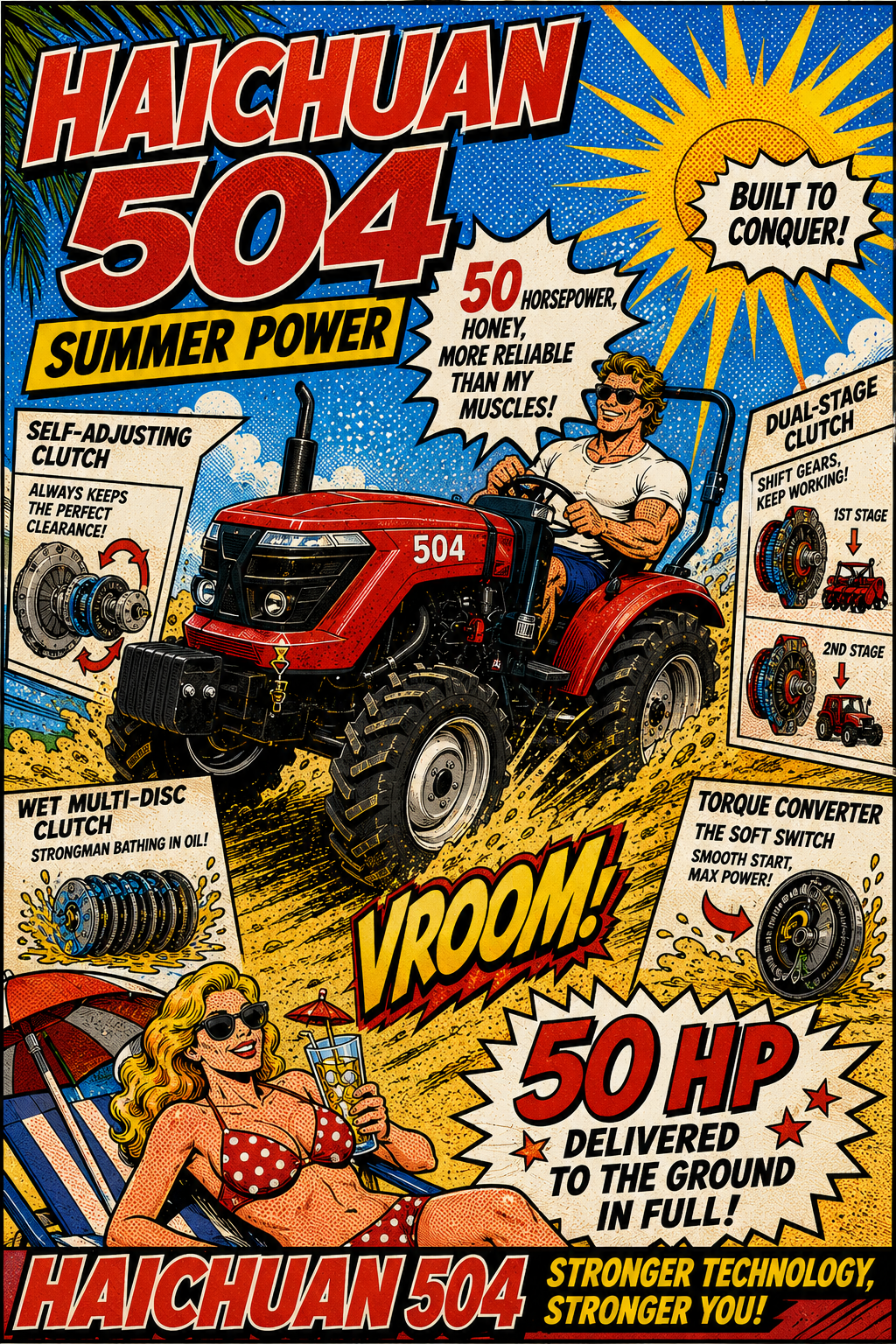
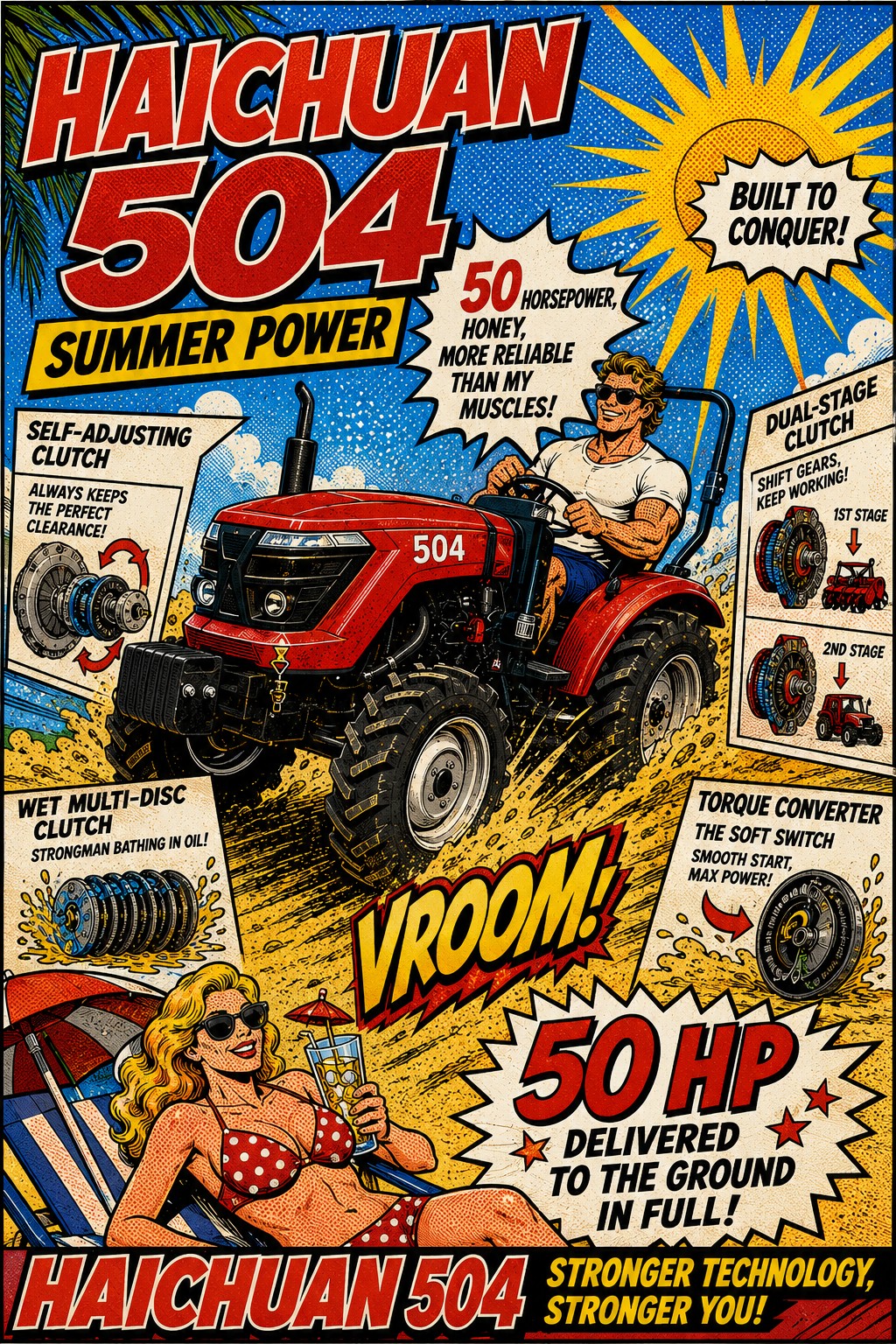
The old‑school fix was manual adjustment, which is time and labor. Then came self‑adjusting clutch technology. They pack a mechanical compensation mechanism inside the pressure plate. The idea's like a screw that tightens itself: every time the disc wears down a hair, a sensor ring triggers the compensation mechanism to rotate a tiny bit, pushin' the pressure plate a hair closer to the flywheel. That wear gap gets taken up automatically, so the release clearance stays factory‑fresh from the day it leaves the plant till the disc is completely worn out. Pedal height and feel barely change.
French company Valeo has this SAT (Self‑Adjusting Technology) across much of their agricultural clutch line, covering most European tractor models. It's purely mechanical—no electronics, no hydraulic lines needed. When you talk to a customer about it, one line sums it up: "Does the clutch pedal feel the same after a year of work as it did on day one?" A regular one sinks lower and lower; a self‑adjustin' one don't.
Tractor Special: Dual‑Stage Clutch
Tractors got one big difference from cars: besides driving the wheels, they gotta drive implements. That spinning shaft stickin' out the back—the Power Take‑Off (PTO)—runs rotary tillers, harvesters, seeders, all that good stuff. Here's the problem: sometimes you need to stop the tractor to shift gears, but the implement can't stop. That rotary tiller's down in the dirt chewin' away; if it stops every time you shift, you get a big ugly clod.
Engineers came up with a slick fix: the dual‑stage clutch.
Two clutches packed in one housing, controlled by a single pedal in two stages. First stage: you push the pedal partway down, and only the drive‑wheel clutch (main clutch) disengages. The PTO clutch stays clamped tight, so the implement keeps spinnin' happy. You can stop and shift gears without interruptin' the implement work. Second stage: you push the pedal all the way to the floor, and the PTO clutch (secondary clutch) disengages too. All power cut. When you backin' up to dump fertilizer, you floor it, everything disconnects, you grab reverse, ease off the pedal, and implements and wheels come back online together.
Picture a backpack with two chest buckles. Unclip the first one, the pack still hangs on your shoulders. Unclip the second, and you can take the whole thing off. Dual‑stage clutch is that same logic.
Wet Multi‑Disc Clutch: The Strongman Bathing in Oil
A dry clutch cools itself with air. Under heavy‑duty work—loaded starts, constant half‑clutch work, tight turnarounds at the headland—heat builds up wicked fast, and the disc can burn out. So engineers thought: let's dunk the clutch plates in oil. That's the wet multi‑disc clutch.
The structure flips the dry single‑plate idea around: multiple friction discs and steel separator plates are stacked in alternating layers, all submerged in cooling oil. Engagement comes from a hydraulic piston—when oil pressure pushes the piston, it clamps the whole stack together to transmit power. When pressure releases, the oil flows away, carryin' the heat with it.
The upsides are clear: killer cooling, no fear of long slippage periods; the multi‑disc stack handles huge torque in a compact package; and with an electro‑hydraulic proportional valve precisely controlling engagement pressure, starts and shifts come out smooth as silk. Last chapter we saw Haichuan Heavy Industry using a wet multi‑disc clutch with proportional valves on some higher‑spec models to get power‑shift and power‑shuttle without breakin' torque. Same path.
4.2.2 Torque Converter: The Soft Switch That Don't Need to Slide
The clutch solves the start‑up problem with sliding—metal on metal, slippin' on purpose. But what if there was a way that never let metal touch metal in the first place, so you ain't gotta slide at all? There is. That's the torque converter.
The Game of Two Fans Facing Each Other
The principle of a torque converter is easy to show with one experiment:
Grab two electric fans, set 'em face‑to‑face. Plug one in (that's your impeller, connected to the engine flywheel), leave the other unplugged (that's your turbine, connected to the transmission input shaft). When the powered fan kicks on, the airflow hits the blades of the fan across from it, and that second fan starts spinnin'. No metal touchin' metal anywhere—just air passin' the energy along.
A torque converter is the same deal, except it don't use air; it uses hydraulic fluid. Packed full of oil, three core parts inside:
Impeller (Pump): Connected to the engine. Engine spins it, and it slings oil outward like a pump.
Turbine: Facing the impeller, connected to the transmission input shaft. The high‑speed oil the impeller flings out slams into the turbine blades, and the turbine spins. Power passed without a single solid part touchin'.
Stator: Wedged between impeller and turbine, fixed in place. Its job is to redirect the oil flow.
Torque Multiplies Automatically on Start‑Up – The Stator's Magic
When the tractor first starts movin' and the turbine is turnin' real slow, the oil bouncin' back from the turbine flows against the impeller's rotation. The stator grabs that oil and redirects it so it flows back with the impeller's spin, givin' the impeller an extra push. At this moment, the torque converter's output torque can be more than double the engine's input torque. This is where it's different from a clutch: a clutch needs the gearbox behind it to reduce speed and multiply torque; a torque converter multiplies torque by itself right at start‑up.
Once the tractor's rollin' and the turbine speed gets close to the impeller speed, the oil‑flow direction changes. The stator then freewheels on a one‑way clutch and spins along, no longer multiplyin' torque—the converter becomes a "coupling," just passin' power without multiplyin'. At highway cruise, some torque converters got a lock‑up clutch inside that mechanically locks the impeller and turbine together. Boom—fluid drive turns into pure mechanical drive, and efficiency jumps back near one hundred percent.
Comparison and When to Use Which
What You Lookin' At Dry Clutch Torque Converter Connection Method Mechanical friction, half‑clutch "sliding" start Fluid drive, completely contact‑free Start‑Up Torque Multiply None, needs gearbox reduction Automatically multiplies on start‑up Cooling Air‑cooled, can overheat with repeated starts Oil‑circulation cooling, naturally tough Smoothness Depends on driver's foot control of half‑clutch Throttle does it all, naturally smooth Efficiency 100% once locked up Has slip loss, needs lock‑up clutch to compensate Typical Use Low‑to‑mid horsepower manual tractors High‑horsepower tractors, construction machinery, some power‑shift tractors In the ag and construction powertrain world, Germany's ZF has supplied power‑shift transmissions with torque converters for quite a few international tractor and loader brands. ZF's TORQUE series integrates the converter, power‑shift gearbox, and wet multi‑disc brakes into one package, lettin' the machine run stepless and without power interruption under heavy load. When a customer asks you about "automatic" setups on big tractors, you can tell 'em: behind that is usually a torque converter or wet‑clutch power‑shift package—ZF‑style integrated drivetrains show up in a lot of brands.
4.2.3 Wrap It Up: The Iron Handshake and the Oil Fan—Which One Gets the Job Done Smoother?
Aight, chief engineer, let's put it all together.
The clutch handles the start‑up problem with half‑clutch slippage—it lets the driven plate and flywheel slide on purpose, using that grind to soak up the speed difference and pass power gently. A dry clutch relies on the driver's foot to control that slide; a wet multi‑disc uses hydraulic proportional valves; self‑adjusting tech keeps that slide feel the same for life.
The torque converter goes even further. It don't slide at all—from birth, it don't let metal touch metal. Oil does the work, naturally carryin' a speed difference, naturally multiplyin' torque, naturally smooth.
One line for your customers: If it's got a clutch pedal, it's an iron handshake slidin' the job done. If you just hit the gas and go, an oil fan is doin' the work for you. When you talkin' with a customer, ask 'em straight: "Your ground over there—heavy clay for deep plowin', or sandy loam for haulin'?" That alone will pretty much tell you which direction to steer 'em.
Next time, we gon' climb inside the gearbox and watch how a pile of gears works magic, turnin' that engine's narrow attitude into all the different moods a tractor needs to get every farm job done. See you on the field bank!
→



Latest News
Official information, learn about the latest developments of SHANGLONG.
- ▶ Ultimate 4WD Compact Utility Tractor: Maximum Power for Modern Agriculture
- ▶ The 50HP Compact Tractor Redefining High-Efficiency Farming Worldwide
- ▶ REVOLUTIONIZE YOUR FARMING: THE NEW 15HP 4X2 COMPACT TRACTOR
- ▶ Breaking: Ultimate 25HP 4WD Compact Tractor Set to Disrupt the European Small Farming Market
- ▶ Why This Tractor is Transforming Small-Scale Agriculture
- ▶ New 80HP 4WD Heavy Duty Farm Tractor with 12 Plus 12 Shuttle Shift for Sale
- ▶ ? THE BEAST IS HERE! The All-New 50HP 4WD Heavy-Duty Tractor Redefines Farm Productivity!
Contact With Us

Please enter what you want to find
Send Your Inquiry Today
*We respect your confidentiality and all information are protected.